
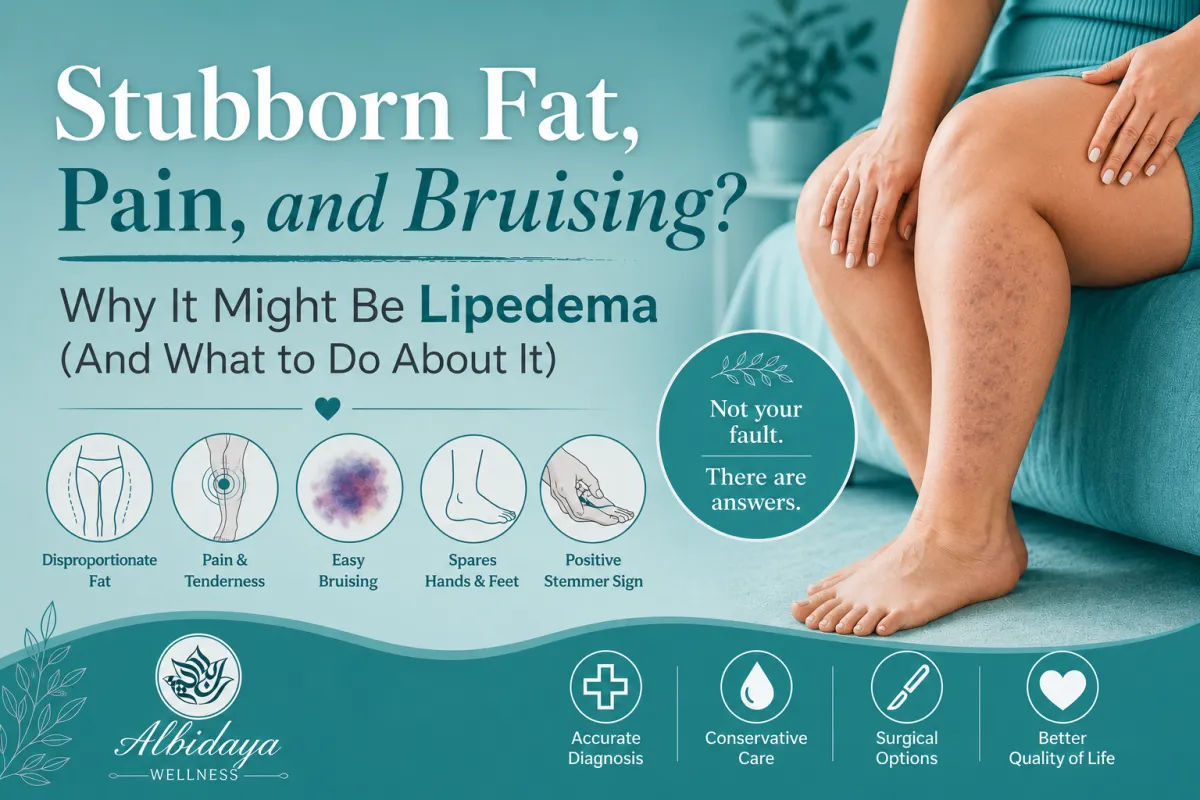
Stubborn Fat, Pain, and Bruising? Why It Might Be Lipedema (And What to Do About It)
Have you noticed that no matter how much weight you lose, certain areas of your body—like your hips, thighs, legs, or arms—simply won't budge? If you've been repeatedly told by doctors to "just eat less and move more," or that your symptoms are just genetics or hormones, you are not alone.
In fact, only roughly 30% of doctors even recognize or refer patients for a condition that affects up to 1 in 10 women: Lipedema.
Here is what you need to know about this commonly misunderstood condition, how to recognize its signs, and what you can actually do to find relief.
What is Lipedema?
Lipedema is a chronic, progressive disorder of the fat tissue. It causes abnormal fat deposition primarily in the legs, hips, buttocks, and sometimes the arms.
Think of it not as regular fat, but as "fat on steroids." This fat is highly inflammatory. It hypertrophies (grows to an excess) to the point where it begins to affect surrounding nerves and blood vessels. Because this fat is structurally distinct from regular fat caused by excess calories, it does not respond to traditional dieting, calorie restriction, or intense exercise.
The onset of lipedema is almost exclusively tied to hormonal fluctuations in women. Symptoms often begin or worsen during puberty, pregnancy, or perimenopause/menopause.

Recognizing the Signs: Is it Lipedema?
Because lipedema is often misdiagnosed as standard obesity or lymphedema, it's crucial to know the specific hallmarks of the condition. Women with lipedema often experience:
Disproportionate Fat Distribution: A smaller, thinner torso compared to significantly larger arms, hips, or legs.
Pain and Tenderness: The affected areas are often very painful to the touch. It is frequently described as a "deep heaviness," as if walking through water.
Easy Bruising: Because the expanding fat compresses surrounding blood vessels, bruising occurs very easily.
Sparing of the Hands and Feet: The abnormal fat typically stops abruptly at the wrists or ankles, creating a phenomenon known as "cuffing" (a visible ridge where the fat stops and the normal tissue begins).
The Stemmer Sign: If you try to pinch and lift the fold of skin at the base of your second toe, it is usually easy on a healthy limb. In lipedema, structural changes can make this skin difficult to lift, which helps doctors differentiate it from other conditions.

The Misdiagnosis Trap
Lipedema, lymphedema, and obesity can all exist at the same time, making diagnosis tricky. Here is how they typically differ:

The Hidden Toll: Physical and Emotional Impact
Lipedema is not just a cosmetic issue; it deeply affects daily life.
Physically, women live with chronic, widespread pain and severe fatigue. As the disease progresses through its stages—from early nodules under the skin to overhanging tissue—mobility becomes increasingly difficult. Standing, walking, and even sitting can become intensely uncomfortable.
Emotionally and socially, the toll is equally heavy. The medical gaslighting that comes from being told you just "aren't trying hard enough" creates immense body shame and stigma. Many women feel failed by the healthcare system, leading to depression, anxiety, and social withdrawal due to the pain and fear of judgment.
Treatment and Management Options
While there is no true "cure" for lipedema, there are highly effective ways to manage the symptoms, reduce pain, and halt progression. The best outcomes usually come from combining surgical and conservative management.
Surgical Treatment
The only surgical option is specialized liposuction performed by a plastic surgeon trained in lipedema. By physically removing the volume of abnormal, inflammatory fat, surgeons can drastically reduce the patient's pain and physical burden.

Conservative Management
Anti-Inflammatory Nutrition: Because lipedema is an inflammatory condition, reducing inflammatory triggers can ease symptoms. This often means eliminating dairy, gluten, and sugar (and potentially soy).
Aquatic Exercise: High-impact workouts can be painful. Low-impact aquatic exercises are highly recommended. The cool water reduces inflammation, and the buoyancy makes movement easier and less painful.
Compression Therapy: Medical-grade compression garments (ideally custom-fitted) are the standard of care for daily management.
Manual Lymphatic Drainage (MLD): A specialized therapist can perform MLD as part of Complete Decongestive Therapy (CDT) to help move fluid and reduce discomfort.
Vibration Plates: Many patients find that using a vibration plate, especially before bed or after sitting for long periods, significantly reduces pain and inflammation.
Medications: While still being studied, some doctors prescribe medications off-label to help with inflammation and nodules, such as Metformin, GLP-1 agonists, Phentermine (for weight/edema management), and sometimes Guaifenesin. Always consult your physician before starting any new medication.

Ready to Find Answers?
If you recognize these symptoms in yourself, you don't have to navigate this alone or accept "eat less, move more" as your only answer.
Book a quick 30-minute consultation today.
We will go over what you're experiencing, discuss whether it could be lipedema, and set you up for a full diagnostic consult. I also partner with organizations that can help you navigate surgical treatment and insurance coverage.
Schedule your consultation here or reach out via email or text to take the first step toward feeling better in your body.